Top 10 Herbs: Tiny Leaves, Massive Benefits

When people think about nutrition, they usually focus on fruits, vegetables, protein, or supplements. Yet some of the most nutrient-dense foods on the planet are often used only as garnishes: herbs.

Fresh herbs may be small, but they are packed with vitamins, minerals, antioxidants, and unique plant compounds that support overall health. Adding a handful of herbs to your meals is one of the easiest ways to increase nutrient density without adding many calories.

Why Herbs Matter

Most herbs contain only 1 to 5 calories per serving, yet they provide valuable nutrients that support immunity, digestion, heart health, and metabolism.

Some herbs are naturally rich in:

  • Vitamin A for vision and skin health
  • Vitamin C for immune support
  • Vitamin K for strong bones
  • Iron for oxygen transport
  • Calcium for bones and muscles
  • Potassium for hydration and blood pressure balance
  • Magnesium for energy production and muscle function

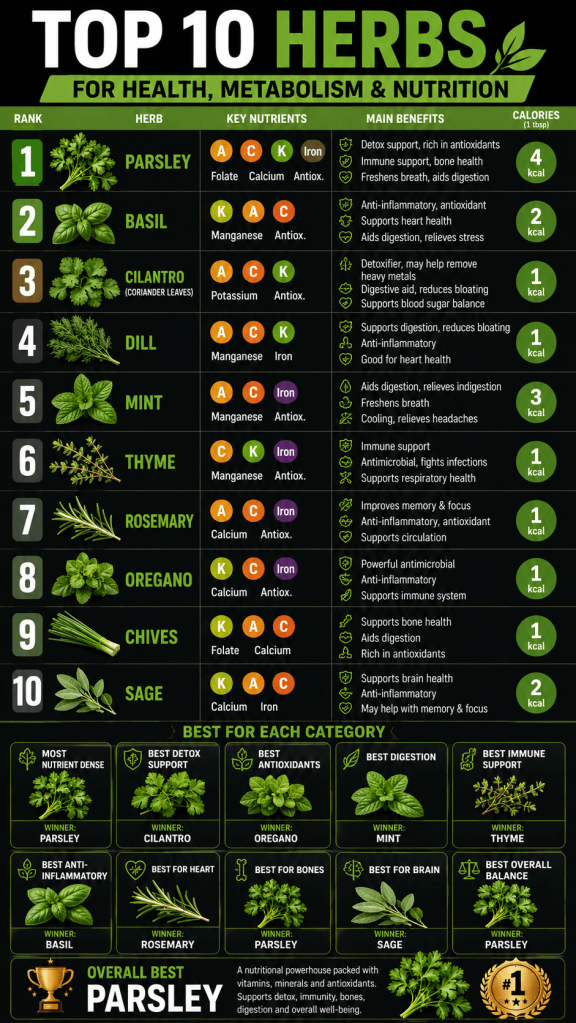
Top Herbs and Their Benefits

1. Parsley πŸ†

Often overlooked, parsley is one of the most nutrient-dense herbs available.

Benefits:

  • Supports immune health
  • Rich in antioxidants
  • Helps support bone health
  • Freshens breath naturally

Key Nutrients:
Vitamin K, Vitamin C, Vitamin A, Folate, Iron

2. Basil 🌿

A flavorful herb rich in antioxidants.

Benefits:

  • Supports heart health
  • May help reduce inflammation
  • Promotes healthy digestion

Key Nutrients:
Vitamin K, Vitamin A, Manganese

3. Cilantro

Known for its fresh taste and unique plant compounds.

Benefits:

  • Supports digestion
  • Rich in antioxidants
  • Provides Vitamin A and Vitamin C

4. Dill

A classic herb with impressive nutritional value.

Benefits:

  • Supports digestion
  • Rich in antioxidants
  • Contains valuable minerals

5. Mint

One of the world’s most popular herbs.

Benefits:

  • Refreshes breath
  • Supports digestion
  • Provides a cooling sensation

6. Thyme

A powerful culinary herb.

Benefits:

  • Supports immune health
  • Naturally rich in antioxidants
  • Traditionally used for respiratory support

7. Rosemary

Known for its strong aroma and flavor.

Benefits:

  • Supports circulation
  • Rich in antioxidants
  • May help support focus and concentration

8. Oregano

One of the most antioxidant-rich herbs.

Benefits:

  • Supports immune health
  • Rich in beneficial plant compounds
  • Adds intense flavor without extra calories

9. Chives

A mild onion-flavored herb.

Benefits:

  • Supports bone health
  • Contains Vitamin K
  • Adds nutrients to salads and eggs

10. Sage

A traditional herb used for centuries.

Benefits:

  • Rich in antioxidants
  • Supports cognitive function
  • Provides Vitamin K and minerals

Funny Herb Facts 🌱

  • Parsley was once used as a breath freshener long before chewing gum existed.
  • Basil is considered a symbol of love in some cultures.
  • Mint grows so aggressively that many gardeners keep it in separate containers.
  • Oregano contains more antioxidants per gram than many fruits.
  • Rosemary has been associated with memory and remembrance for thousands of years.

The Metabolist Herb Ranking

πŸ₯‡ Parsley
πŸ₯ˆ Basil
πŸ₯‰ Cilantro
4. Dill
5. Mint
6. Thyme
7. Rosemary
8. Oregano
9. Chives
10. Sage

Final Thoughts

Herbs may be small, but they deliver an impressive amount of nutrition. By adding fresh herbs to salads, soups, smoothies, eggs, meats, and vegetables, you can boost flavor, increase nutrient density, and support overall health naturally.

If there is one herb that stands above the rest for overall nutrition, versatility, and nutrient density, parsley earns the crown.
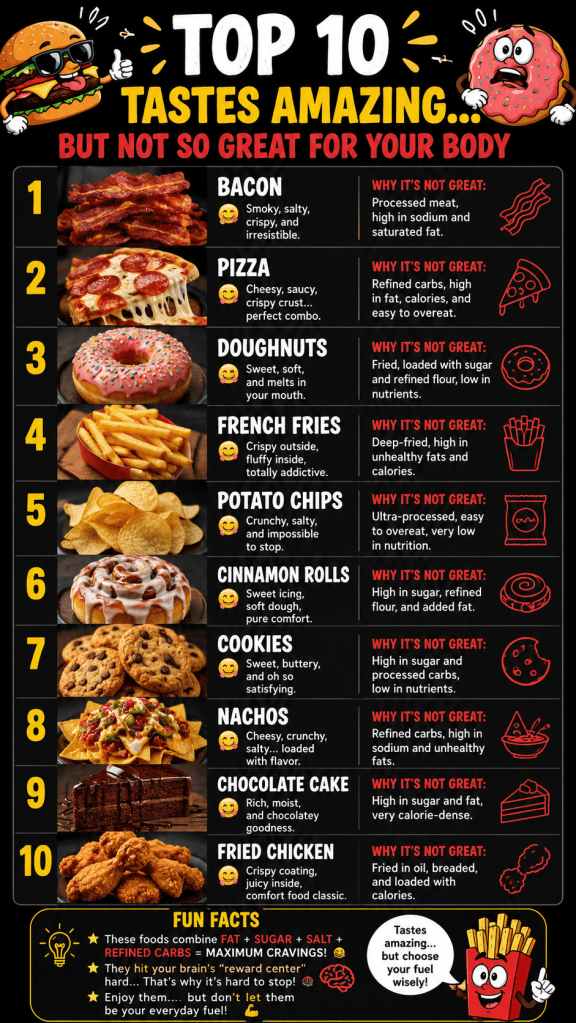
Top 10 Foods That Taste Great… But Are Not the Best Fuel for Your Body

RankFoodWhy It Tastes So GoodWhy It Can Be Hard on Your Body
πŸ₯‡ 1BaconSmoky, salty, crispy, rich fatProcessed meat, high sodium, high saturated fat
πŸ₯ˆ 2PizzaCheese + crust + fat + saltHigh calories, refined flour, lots of fat and sodium
πŸ₯‰ 3DoughnutsSugar, glaze, soft textureRefined sugar, fried oils, low nutrients
4French FriesCrispy outside, fluffy insideDeep-fried, calorie-dense, low protein
5Potato ChipsCrunchy, salty, addictiveEasy to overeat, ultra-processed
6Cinnamon RollsSweet icing and soft doughHigh sugar + refined flour + added fat
7CookiesSweet, buttery, comfortingHigh sugar, refined flour, low satiety
8NachosCheese, chips, salt, crunchRefined carbs, excess fat, high sodium
9Chocolate CakeRich, sweet, decadentSugar and fat combination with few nutrients
πŸ”Ÿ 10Fried ChickenCrispy coating, juicy meatFried oils, breading, calorie-dense

Common Pattern

Most of these foods combine:

βœ… Fat
βœ… Refined Carbs
βœ… Salt
βœ… Sugar

This combination makes them extremely enjoyable to eat, but they generally provide fewer vitamins, minerals, protein, and fiber compared with whole foods like eggs, fruit, potatoes, milk, fish, and meat.

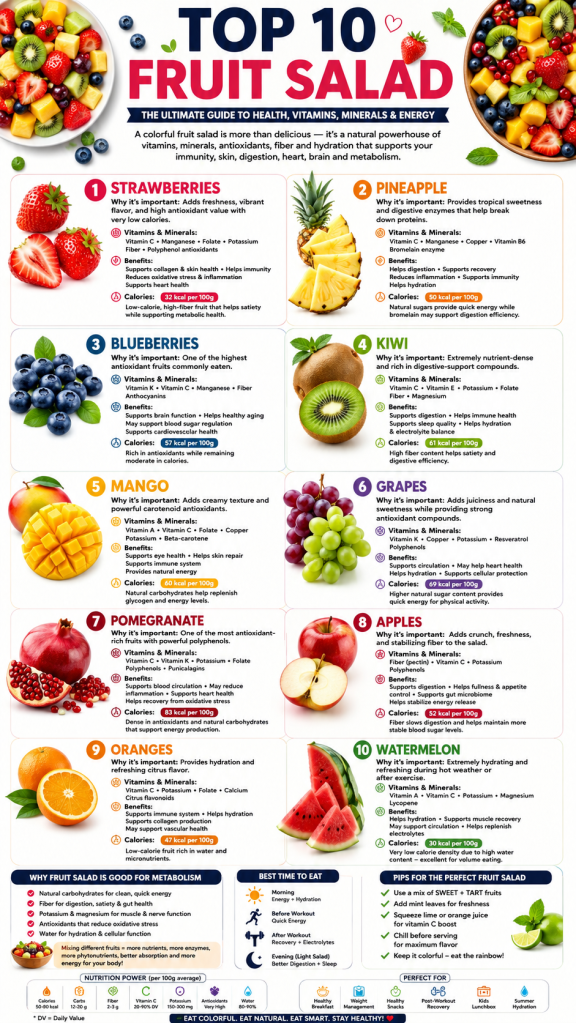
TOP 10 FRUITS FOR THE PERFECT FRUIT SALAD πŸ“πŸπŸ₯

1. Strawberries πŸ“

Why it’s important:
Adds freshness, vibrant flavor, and high antioxidant value with very low calories.

Main vitamins & minerals:

  • Vitamin C
  • Manganese
  • Folate
  • Potassium
  • Fiber
  • Polyphenol antioxidants

Benefits:

  • Supports collagen production and skin health
  • Helps immune function
  • May reduce oxidative stress and inflammation
  • Supports heart health

Calories & metabolism:

About 32 calories per 100g.
Low-calorie and high-fiber fruit that helps satiety while supporting metabolic health.


2. Pineapple 🍍

Why it’s important:
Provides tropical sweetness and digestive enzymes that help break down proteins.

Main vitamins & minerals:

  • Vitamin C
  • Manganese
  • Copper
  • Vitamin B6
  • Bromelain enzyme

Benefits:

  • Helps digestion
  • Supports recovery and inflammation reduction
  • Supports immune system
  • Helps hydration

Calories & metabolism:

About 50 calories per 100g.
Natural sugars provide quick energy while bromelain may support digestion efficiency.


3. Blueberries 🫐

Why it’s important:
One of the highest antioxidant fruits commonly eaten.

Main vitamins & minerals:

  • Vitamin K
  • Vitamin C
  • Manganese
  • Fiber
  • Anthocyanins

Benefits:

  • Supports brain function
  • Helps healthy aging
  • May support blood sugar regulation
  • Supports cardiovascular health

Calories & metabolism:

About 57 calories per 100g.
Rich in antioxidants while remaining moderate in calories.


4. Kiwi πŸ₯

Why it’s important:
Extremely nutrient-dense and rich in digestive-support compounds.

Main vitamins & minerals:

  • Vitamin C
  • Vitamin E
  • Potassium
  • Folate
  • Fiber
  • Magnesium

Benefits:

  • Supports digestion
  • Helps immune health
  • Supports sleep quality
  • Helps hydration and electrolyte balance

Calories & metabolism:

About 61 calories per 100g.
High fiber content helps satiety and digestive efficiency.


5. Mango πŸ₯­

Why it’s important:
Adds creamy texture and powerful carotenoid antioxidants.

Main vitamins & minerals:

  • Vitamin A
  • Vitamin C
  • Folate
  • Copper
  • Potassium
  • Beta-carotene

Benefits:

  • Supports eye health
  • Helps skin repair
  • Supports immune system
  • Provides natural energy

Calories & metabolism:

About 60 calories per 100g.
Natural carbohydrates help replenish glycogen and energy levels.


6. Grapes πŸ‡

Why it’s important:
Adds juiciness and natural sweetness while providing strong antioxidant compounds.

Main vitamins & minerals:

  • Vitamin K
  • Copper
  • Potassium
  • Resveratrol
  • Polyphenols

Benefits:

  • Supports circulation
  • May help heart health
  • Helps hydration
  • Supports cellular protection

Calories & metabolism:

About 69 calories per 100g.
Higher natural sugar content provides quick energy for physical activity.


7. Pomegranate ❀️

Why it’s important:
One of the most antioxidant-rich fruits with powerful polyphenols.

Main vitamins & minerals:

  • Vitamin C
  • Vitamin K
  • Potassium
  • Folate
  • Polyphenols
  • Punicalagins

Benefits:

  • Supports blood circulation
  • May reduce inflammation
  • Supports heart health
  • Helps recovery from oxidative stress

Calories & metabolism:

About 83 calories per 100g.
Dense in antioxidants and natural carbohydrates that support energy production.


8. Apples 🍎

Why it’s important:
Adds crunch, freshness, and stabilizing fiber to the fruit salad.

Main vitamins & minerals:

  • Fiber (pectin)
  • Vitamin C
  • Potassium
  • Polyphenols

Benefits:

  • Supports digestion
  • Helps fullness and appetite control
  • Supports gut microbiome
  • Helps stabilize energy release

Calories & metabolism:

About 52 calories per 100g.
Fiber slows digestion and helps maintain more stable blood sugar levels.


9. Oranges 🍊

Why it’s important:
Provides hydration and refreshing citrus flavor.

Main vitamins & minerals:

  • Vitamin C
  • Potassium
  • Folate
  • Calcium
  • Citrus flavonoids

Benefits:

  • Supports immune system
  • Helps hydration
  • Supports collagen production
  • May support vascular health

Calories & metabolism:

About 47 calories per 100g.
Low-calorie fruit rich in water and micronutrients.


10. Watermelon πŸ‰

Why it’s important:
Extremely hydrating and refreshing during hot weather or after exercise.

Main vitamins & minerals:

  • Vitamin A
  • Vitamin C
  • Potassium
  • Magnesium
  • Lycopene

Benefits:

  • Helps hydration
  • Supports muscle recovery
  • May support circulation
  • Helps replenish electrolytes

Calories & metabolism:

About 30 calories per 100g.
Very low calorie density because of high water content, making it excellent for volume eating and hydration.


WHY FRUIT SALAD IS GOOD FOR METABOLISM ⚑

A balanced fruit salad provides:

  • Natural carbohydrates for energy
  • Fiber for digestion and satiety
  • Potassium and magnesium for muscle and nerve function
  • Antioxidants that help reduce oxidative stress
  • Water for hydration and cellular function

Combining multiple fruits also increases nutrient diversity, giving the body a wider spectrum of vitamins, minerals, enzymes, and phytonutrients.

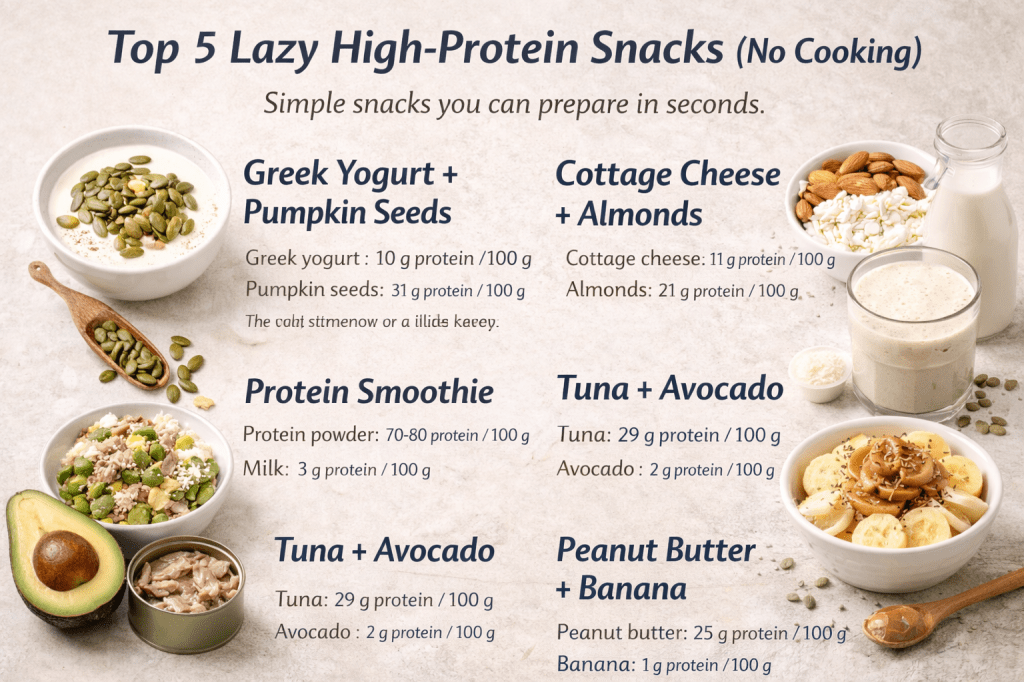
Top 5 Lazy High-Protein Snacks (No Cooking)

Simple snacks you can prepare in seconds.


1️⃣ Greek Yogurt + Pumpkin Seeds
Greek yogurt: 10 g protein / 100 g
Pumpkin seeds: 31 g protein / 100 g

Tip: add cinnamon or a little honey.


2️⃣ Cottage Cheese + Almonds
Cottage cheese: 11 g protein / 100 g
Almonds: 21 g protein / 100 g

Creamy and very filling.


3️⃣ Protein Smoothie
Protein powder: 70–80 g protein / 100 g
Milk: 3 g protein / 100 g

Very fast high-protein option.


4️⃣ Tuna + Avocado
Tuna: 29 g protein / 100 g
Avocado: 2 g protein / 100 g

High protein + healthy fats.


5️⃣Home Peanut Butter + Banana
Peanut butter: 25 g protein / 100 g
Banana: 1 g protein / 100 g

Good energy snack.

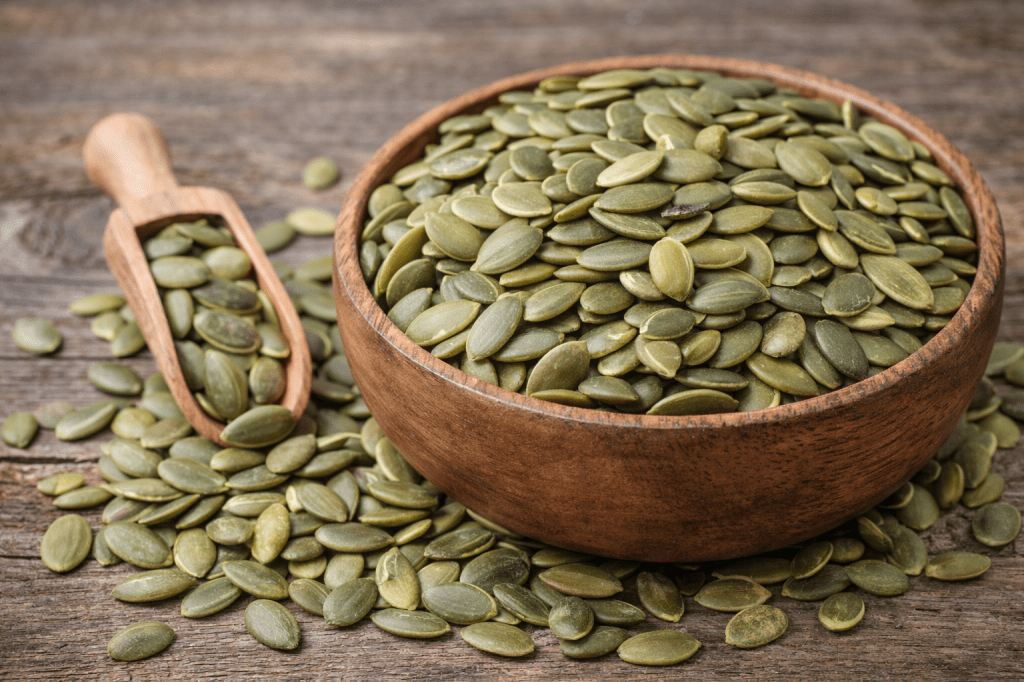
Pumpkin Seeds: A Small Food with Big Nutrition πŸŽƒ

Pumpkin seeds may be small, but they are one of the most nutritious snacks you can eat.

These tiny seeds are packed with protein, healthy fats, magnesium, and antioxidants. Many people don’t realize how powerful they are for overall health.

Funny fact

Pumpkin seeds contain about 31 grams of protein per 100 grams, which is almost the same amount of protein as chicken.

That makes them one of the best plant-based protein foods.

Why pumpkin seeds are healthy

Here are some benefits of pumpkin seeds:

β€’ High in plant protein
β€’ Rich in magnesium for muscles and energy
β€’ Good source of healthy fats
β€’ Contain antioxidants that support overall health

They are also a great snack for people who want more natural protein in their diet.

Easy ways to eat pumpkin seeds

Adding pumpkin seeds to your meals is very simple.

You can:

β€’ Sprinkle them on salads
β€’ Add them to smoothies
β€’ Mix them into yogurt or oatmeal
β€’ Eat them as a healthy snack
β€’ Add them to granola or trail mix

They add a nice crunch and nutty flavor to many foods.

A quality pumpkin seed product

If you want an easy way to add pumpkin seeds to your diet, you can try:

Viva Naturals Organic Pumpkin Seeds

These organic pumpkin seeds are a convenient snack and can easily be added to smoothies, salads, or breakfast bowls.