Starting a new diet often feels exciting at first. But sometimes, even when you follow the rules perfectly, your body may not respond the way you expected. Instead of feeling energized and healthy, you might feel tired, bloated, or constantly hungry.
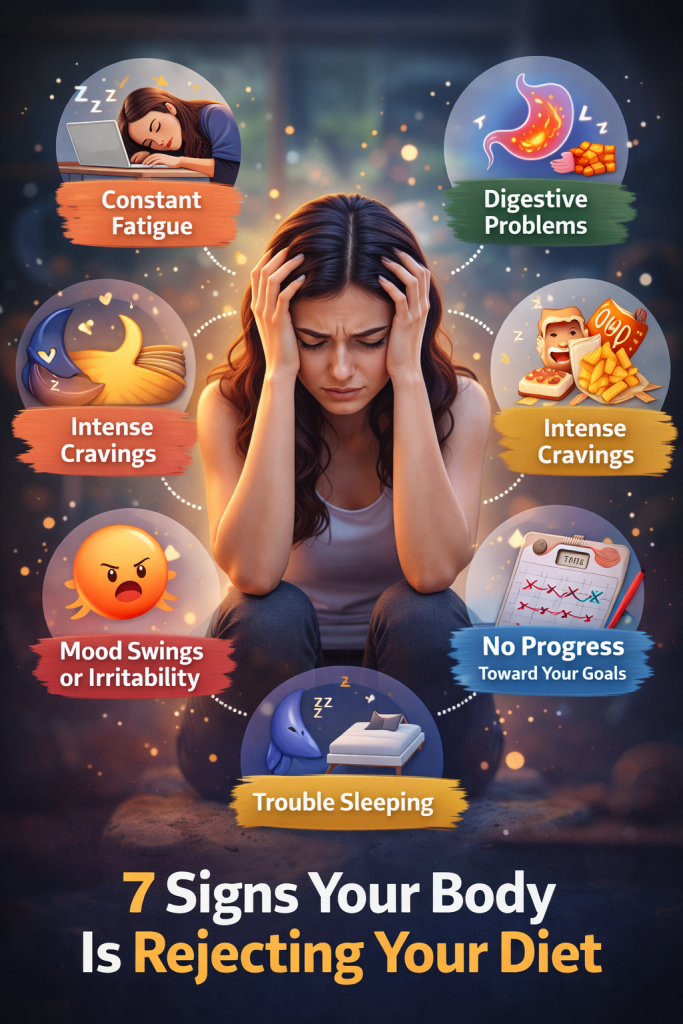
Here are seven signs your current diet may not be the right match for your body — and simple ways to adjust.
1. Constant Fatigue If you feel drained most of the day, your body might not be getting the nutrients it needs.
Possible solution: Make sure you are getting enough calories and balanced nutrients. Adding healthy carbohydrates, proteins, or healthy fats depending on your diet style can help restore energy.
2. Digestive Problems Frequent bloating, stomach pain, or irregular digestion can be a sign that certain foods don’t suit your system.
Possible solution: Try identifying trigger foods. Keeping a simple food journal for a week can help you notice patterns and adjust accordingly.
3. Intense Cravings If you constantly crave sugar or salty foods, your body might be missing essential nutrients.
Possible solution: Increase whole foods such as vegetables, fruits, nuts, seeds, and quality proteins to stabilize hunger and reduce cravings.
4. Mood Swings or Irritability Nutrition affects brain chemistry. Sudden mood swings or irritability may occur when blood sugar levels fluctuate.
Possible solution: Focus on balanced meals that include protein, fiber, and healthy fats to keep blood sugar more stable.
5. Trouble Sleeping Poor nutrition or restrictive diets can interfere with sleep quality.
Possible solution: Make sure you’re eating enough during the day and include magnesium-rich foods like leafy greens, almonds, or seeds.
6. No Progress Toward Your Goals Whether your goal is better energy, improved health, or weight management, a diet that produces no results may not be ideal for you.
Possible solution: Instead of forcing one diet style, experiment with adjustments. Sometimes small changes in portion sizes or food variety make a big difference.
7. You Feel Miserable Following It If your diet constantly feels restrictive, stressful, or difficult to maintain, it may not be sustainable.
Possible solution: Choose a flexible eating approach that allows variety while still supporting your health goals.
Conclusion The best diet isn’t the trendiest one—it’s the one your body responds to positively. By paying attention to energy, digestion, mood, and overall well-being, you can gradually adjust your nutrition to find a sustainable and balanced way of eating.
Almonds are a popular snack packed with nutrients that may support mood, energy, and overall wellness. From magnesium to tryptophan, almonds contain compounds that can help stabilize emotions and reduce stress. However, they are not perfect for everyone—some people may need to watch their intake due to oxalates or digestive sensitivity.
6 Benefits of Almonds
1️⃣ Magnesium for Stress Control Almonds are rich in magnesium, a mineral that supports the nervous system. Adequate magnesium can help reduce stress, muscle tension, and even improve sleep quality. #magnesium #stressrelief #wellnesstips
2️⃣ Tryptophan for Mood Balance Tryptophan in almonds helps the body produce Serotonin, which plays a key role in mood regulation and emotional well-being. #serotonin #moodboost #mentalhealth
3️⃣ Stable Blood Sugar Almonds contain protein, fiber, and healthy fats that can slow digestion and help prevent sugar spikes that often affect energy and mood. #bloodsugar #healthyfats #energy
4️⃣ Vitamin B2 (Riboflavin) for Brain Energy Riboflavin supports cellular energy production and helps the brain function optimally, which may contribute to better focus and mental clarity. #brainhealth #bvitamins #focus
5️⃣ Healthy Fats for Brain Health Monounsaturated fats in almonds support cell membranes and overall metabolic and brain health. #brainfood #healthyfats #wellness
6️⃣ Nutrient Density Almonds provide multiple micronutrients in a small portion, including magnesium, vitamin E, and trace minerals, which contribute to overall wellness. #micronutrients #superfood #nutrition
3 Possible Downsides
1️⃣ High Oxalate Content Almonds are high in oxalates, which may reduce mineral absorption in sensitive individuals or contribute to kidney stone formation if consumed in excess. #oxalates #kidneystones #digestion
2️⃣ Digestive Sensitivity Eating large amounts of almonds may cause bloating or discomfort in some people. Moderation is key. #digestion #wellnesstips #guthealth
3️⃣ Calorie Density Almonds are calorie-dense. Overeating regularly may lead to excess calorie intake. #calories #portioncontrol #healthyhabits
Tips for Safe Consumption
Eat almonds in moderation (about 20–30g / a small handful).
Rotate nuts and seeds to avoid overloading on oxalates.
Pair almonds with calcium-rich foods to help reduce oxalate absorption.
Stay hydrated to support mineral balance.
For some people, supplementing magnesium can help maintain mood and stress support naturally. #wellnesstips #healthylifestyle #mindfulnutrition
💡 Optional Affiliate Mention (naturally) Some people also support mood and metabolic health with supplements
1️⃣ Magnesium for stress control Almonds contain magnesium, a mineral that helps regulate the nervous system and may support relaxation and better stress management.
2️⃣ Tryptophan and mood balance Almonds provide tryptophan, an amino acid involved in producing Serotonin, which plays an important role in mood and emotional balance.
3️⃣ Stable blood sugar Because almonds contain healthy fats, fiber, and protein, they may help slow digestion and reduce blood sugar spikes that can affect mood and energy.
4️⃣ Vitamin B2 for brain energy Almonds contain riboflavin (vitamin B2), which helps the body produce energy and supports brain function.
5️⃣ Healthy fats for brain health The monounsaturated fats in almonds support brain cells and overall metabolic health.
6️⃣ Nutrient density A small handful of almonds provides multiple micronutrients such as magnesium, vitamin E, and trace minerals that contribute to overall wellness.
Possible Downsides
1️⃣ High oxalate content Almonds are relatively high in oxalates, which in large amounts may interfere with mineral absorption or contribute to kidney stone formation in sensitive individuals.
2️⃣ Digestive sensitivity Some people may experience bloating or digestive discomfort if they consume large amounts of nuts.
3️⃣ Calorie density Almonds are nutritious but calorie-dense, so eating very large portions regularly may contribute to excess calorie intake.




 Wellness Simple Tips